
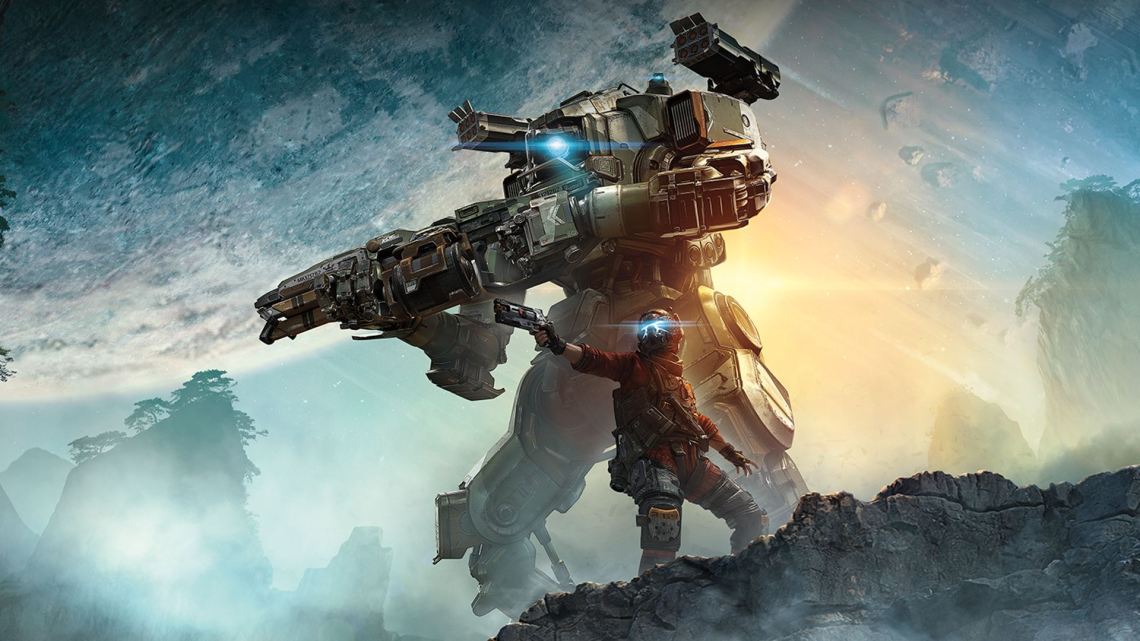
Titanfall 2’s story is often labeled as mediocre and that’s completely reasonable.
While the campaign does many things well, one of the most noticeable weaknesses is its villains. The two main antagonists are barely present and lack development, weakening what could have otherwise been an almost flawless single player experience.
John Truby, writer and author of The Anatomy of Screenplay, claims that great stories are created when conflict is built through what he calls “Four-Corner Opposition”.
While Titanfall has three corners in the form of protagonist Jack Cooper and antagonists, General Marder and Kuben Blisk, it lacks a fourth primary opponent.
For the sake of this exercise, I have upgraded sub antagonist, Ash to the last corner, as she has the most detailed motivations of the remaining secondary antagonists. Through the application of Truby’s Four-Corner Format, Titanfall 2 could have been a richer narrative experience, with complex antagonists.
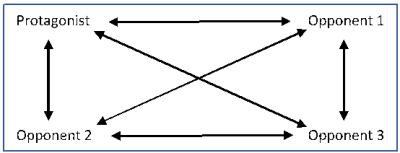
The diagram above shows the basis of Four-Corner Opposition. A narrative consisting of at least four primary characters, one protagonist and three opponents. Instead of a single conflict between the protagonist and singular opponent, Four-Corner Opposition creates multiple challenges between all major characters. Truby states that,
“In average or simple stories, the hero comes into conflict with only one opponent. This standard opposition has the virtue of clarity, but it doesn’t let you develop a deep or powerful sequence of conflicts, and it doesn’t allow the audience to see a hero acting within a larger society.”
Titanfall 2’s conflicts originally exist as Cooper vs Marder and Cooper vs Blisk. By applying Four-Corner Opposition to Titanfall 2’s narrative, we can create a web of interesting conflicts, instead of one primary and secondary conflict.
In addition to officially addressing the conflicts between Marder and Blisk, Ash’s greater role within the story creates the opportunity to challenge her values against those of the original cast. Through Four-Corner opposition, we have more challenges to explore and opportunities to develop characters through their conflicting values and beliefs.
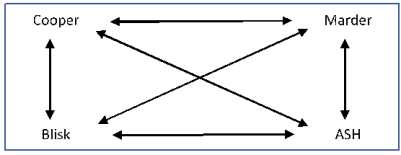
With Four- Corner Opposition Cooper’s primary conflict with Marder still exists. Cooper fights against General Marder and the Interstellar Manufacturing Company (IMC) for the freedom of the Frontier colonists.
In contrast, Marder believes that the Frontier needs to be regulated. If unchecked resources will be exhausted and humanity in Frontier space will perish. Essentially Marder mirrors Thanos from Marvel’s Avengers Infinity War, minus the strange chin and the child abuse.
While this dispute remains intriguing, Cooper is now set up to face additional challenges. For example, Cooper can still fight Blisk and, the Apex Predators, but these encounters are now constructed around Blisk’s primary allegiance being to money, and Cooper’s loyalty to the people of the Frontier. This contrast presents an opportunity for a The Last Jedi style argument about how there will always be fighting between factions, so why not make a profit off it?
While the main disputes from Titanfall 2’s campaign remain, it is the additional secondary conflicts created through Four-Corner Opposition where the characters can really shine. While implied briefly at the very end of the campaign, Blisk and Marder do have conflicting values despite working together. Marder wanted Blisk to kill a vulnerable Cooper, but Blisk had already completed his contract, stating that killing Cooper wasn’t part of it as he walked away. This shows a potential dispute between Marder and Blisk, creating an opportunity to explore both characters values.
Blisk also has a reputation for some amount of loyalty to the members of the Apex Predators. A possible scenario where Blisk helps another member of the Apex Predators, even though it could potentially jeopardize his contract with Marder, could be used to reflect this side of his character. Marder is then angered by the risk Blisk took, stating that, “rescue is not in your contract” to connect with their final exchange during the campaign. These new opportunities for Blisk’s development show that there is more to the character than a desire to get paid.
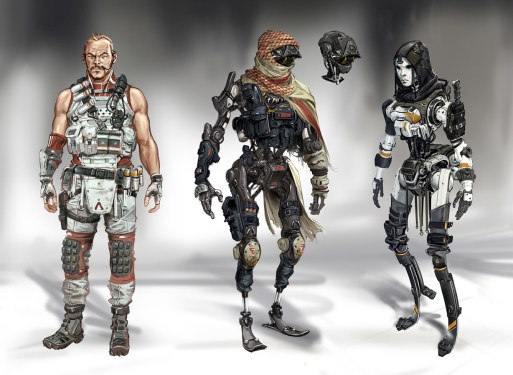
By bringing Ash to the forefront of the story instead of leaving her as a secondary character, Titanfall 2’ is free to create conflicts and scenes that further develop all characters. Ash is a Simulacrum, a human mind uploaded into a robotic body. She has an unexpected sense of honor in combat and intense dedication to her research. Therefore, the major conflict between Ash and Cooper could be an argument on morality versus progress in science.
After all, Ash is featured in a testing facility during the campaign and does experiments on humans. Cooper could argue that her methods are immoral and inhumane causing her to question her remaining humanity revealing an internal conflict.
For Ash vs Blisk, maybe Ash is being saved by Blisk in the hypothetical rescue scenario mentioned earlier. After being beaten by Cooper, Ash tries to recover her research as the facility crumbles around her. Blisk saves her but at the cost of losing her data, putting these characters at odds.
Finally, Ash despises Marder because she believes he lacks honor since he pays others to fight for his cause. However, as a member of the Apex Predators, she is contractually bound to him, creating tension between these two characters.
While Titanfall 2’s campaign is one of the best first-person shooter experiences in recent years, it’s mediocre narrative prevents it from being a near flawless experience. Titanfall 2 does have the adrenaline of a summer action blockbuster, however, it also has the villains of one. Through the application of Truby’s Four-Corner Opposition writing philosophy, we can create a more intertwined narrative. By creating conflicts between Cooper, Marder, Blisk, and Ash we can learn more about them and develop the depth needed to make more complex characters. Through its application to the narrative assets of Titanfall 2, Four-Corner Opposition allows for the development of all major characters, creating a richer narrative experience containing complex individuals without sacrificing any of the pre-existing gameplay assets. This would enable its campaign to rise above its mediocre narrative critiques, adding to the praise Titanfall 2 so rightly deserves.
 Channel Cousin