
Destiny’s third major content update, House of Wolves (HoW), went live May 19th, 2015 and was met with overall positive reception. While most of the feedback on this expansion is focused on endgame content and the progression system, I wanted to look on how the narrative holds up 3 years and one sequel down the line. HoW’s story was fine, which is what it takes a back seat to the rest of the content. As a result, what gets overlooked is HoW’s story structure, impact on the franchise, the quality of the writing/dialogue, and creativity needed to finesse this story out of pre-existing assets. While HoW does have its shortcomings, what it achieves in its storytelling is proof of Destiny’s continued growth in narrative design.
If Crota’s End’s story was Bungie scrambling to slap something together after suffering through and initial tumultuous launch, HoW is Bungie organized and aware of the story they want to tell. It’s clear that by this point the narrative team is achieving some headway with their story structure and have developed a concise formula. As displayed in HoW, Destiny’s narrative structure now follows this pattern.
- Introduce the main antagonist at the beginning of the game, with the player confronting the antagonist directly.
- Follow/battle the main antagonist throughout the story.
- Directly combat the main antagonist at the end of the campaign.
- Have the final battle with the antagonist during the raid activity.)
This structure is focused on the altercations between the protagonist and antagonist, akin to that of a movie or novel. Bungie really buys into this linear structure, as it is carried into the next expansion, The Taken King. HoW’s sees great success with this linear structure and is presented in the following ways:
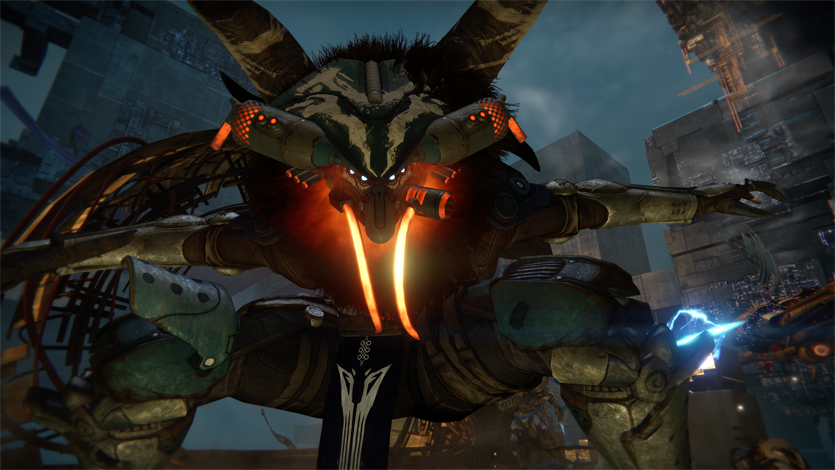
- Soklas, leader of the Fallen House of Wolves and escaped convict, is introduced as the main antagonist for the campaign
- Throughout the story, the player is in a race against Skolas to get to the other Fallen leaders before him, preventing Skolas from seizing power and becoming the ruling body for the Fallen.
- The player defeats Skolas in a final stand resulting in his capture and return to the Prison of Elders
- Skolas is sentenced to trial by combat against a team of 3 players resulting in his ultimate defat.
Conflicts is the driving force behind any story and HoW’s story is focused on the conflict between the player and Skolas. While unfortunately we don’t engage Skolas directly every step of the way, we do fight his armies and impede his plans for control. This centralized storytelling works extremely well for HoW because the conflict is concentrated, and each plot beat flows nicely from one point to the next. Not only do we have a proper antagonist with motivation for fighting him, Skolas’ pursuit of his goals provides the conflict and drive of this narrative. The player duels Skolas throughout the campaign, giving him, significance and making him a memorable character. He isn’t a character we interact with once, he is a crucial, reoccurring presence that we learn more about every step of the way.
The story structure is not the only significantly improved aspect of Bungie’s storytelling. The dialogue crafted in HoW is easily the best we’ve seen so far. While the ghost is still noticeably absent, and our guardian continues to uphold their vow of silence, the exchanges between lead characters Petra Venj and Variks, are nuanced, and have substance to them. Not only are their conversations fluid, but every mission contains some information about the character’s backstory and its relation to the events that are currently taking place. For example
Petra: Before I “earned” my post as the “Queen’s Emissary,” I served her in the Reef Wars. The Silent Fang are assassins, killers. Real charmers. During the war, they went after our commanders. They’ll do the same to the House of Devils. Variks and I know all their tricks, though. We’ll get ’em.
This introduction to the mission, “The Silent Fang” shows us Petra’s relationship to our targets, gives introduces their shared history, and how that event is impacting our current activity. It also uses subtext, with Petra implying that she does not see her “earned” position as such, alluding to her injuries preventing her from working in the field. This layered dialogue is present through the campaign. Implications for how Skolas escaped, events and politics of the Reef War, even a nod to the finale’s time travel incident are present in the first mission. While HoW’s dialogue does not have time to explain every detail, it does assume its players are smart enough to put some of the subtler plot points together on their own.
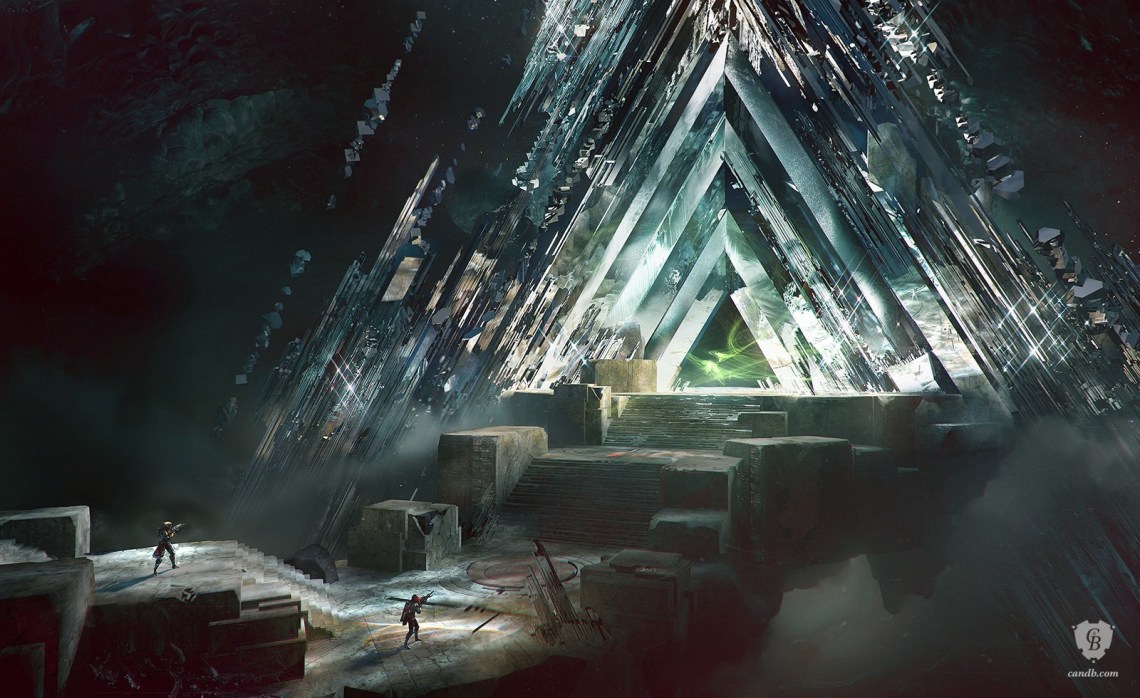
HoW is unarguable proof that Bungie is still able to create an interesting narrative. What I find most fascinating, is how Bungie’s narrative team was able to make so many different pre-existing assets fit together so consistently. Only two new locations were built into the main campaign, and Yes, would more new locations have been exciting to visit? Of course, but creating new content costs resources, the specificities of which are not known to us. Working in a restricted space can often wield greater results than unbounded creativity. Bungie had to deliver an interesting story on a limited budget for developing new assets and were able to pull it off. While the new areas they built for the campaign were interesting, some of the highlights of the campaign for me were visiting areas that had been repurposed, specifically the Vault of Glass, home of Destiney’s first raid activity. Incorporating aspects of the multiplayer raid into the Campaign was not only a great way to enable players who were unable to find a group to experience Destiny’s best content, but the narrative team was able to justify our reason for being there. Trying to prevent Skolas from using the Vault’s technology to bring troops from the House of Wolves through time shows us how cunning, dangerous, and desperate he is, and it all flows together smoothly. Re-incorporating assets in a believable manner is truly a creative triumph that went under appreciated.
While HoW accomplishes much within its narrative, there are a few complaints with some of the choices made in HoW that I feel should be addressed. My major criticism for HoW’s story is the player only witnesses Soklas’ motivation for uniting the Fallen Houses as a selfish tactic to become the “Kell of Kells”, a legendary leader of a Fallen prophecy. Skolas’ true motivation is hidden away on Bungie’s website in the text of the grimoire, where he’s has seen the coming of an ancient Fallen enemy of insurmountable strength and seeks to amass the forces to stand against him. This additional layer to Skolas’ motivation provides a complexity not present in Destiny’s past roster of villains. It is unfortunate that this motivation is not brought to the forefront of the story, as it would have made Skolas a more intricate antagonist and provided us with the omen for the future of Destiny. Skolas might be defeated, but the threat he was preparing for is still out there and headed our way. The most interesting aspects of Destiny’s lore do no the game no benefits by hiding in a location external to the game. Incorporating them into the primary narrative develops a richer story experience and puts that story in a position for more people to see and enjoy.
Some smaller criticisms of HoW. The First being that our cast of primary characters from the initial release are again, not used, which really robs them of the character development they are in desperate need of. This is the second content drop and we still know next to nothing about them. My following criticism, arguable more of a complaint, is that a mandatory patrol mission, the “Scattered Pack” quest step, does not qualify as a reasonable quest activity. There is no justifiable reason that our character should have to amble around killing Fallen on Venus before tracking down Skolas. We had no trouble tracking the wolves before, but now suddenly, we do? It completely takes the momentum out of the story and seems only to exist it increase the number of steps in the quest to give the illusion of length. Things had been progressing nicely as far as scale and tension had been concerned, but we’ve got to make this expansion seem longer than it is, so we’re going waste some time by padding out the number of quests with tedious grinding, so this expansion has the illusion of length. After doing so much right, and getting impressively creative, this strategy for “adding” content is embarrassing.
Even though the greater focus of Destiny’s House of Wolves DLC is on multiplayer endgame content, the narrative is able to deliver an impressive single player experience. House of Wolves story is focused, with a clear formula yet riddled with interesting subtext. Dialogue is nuanced and informs players of character backgrounds without becoming obvious exposition. Finally, it’s creative use of pre-existing assets allows players to visit places less traveled, and inaccessible through individual play. While its most complex plot points are left to the grimoire, and minor padding is present, House of Wolves is strong evidence that Bungie’s narrative team is more rehearsed in their storytelling, learning much from their previous bouts, and that Destiny’s best stories are still to come.

