
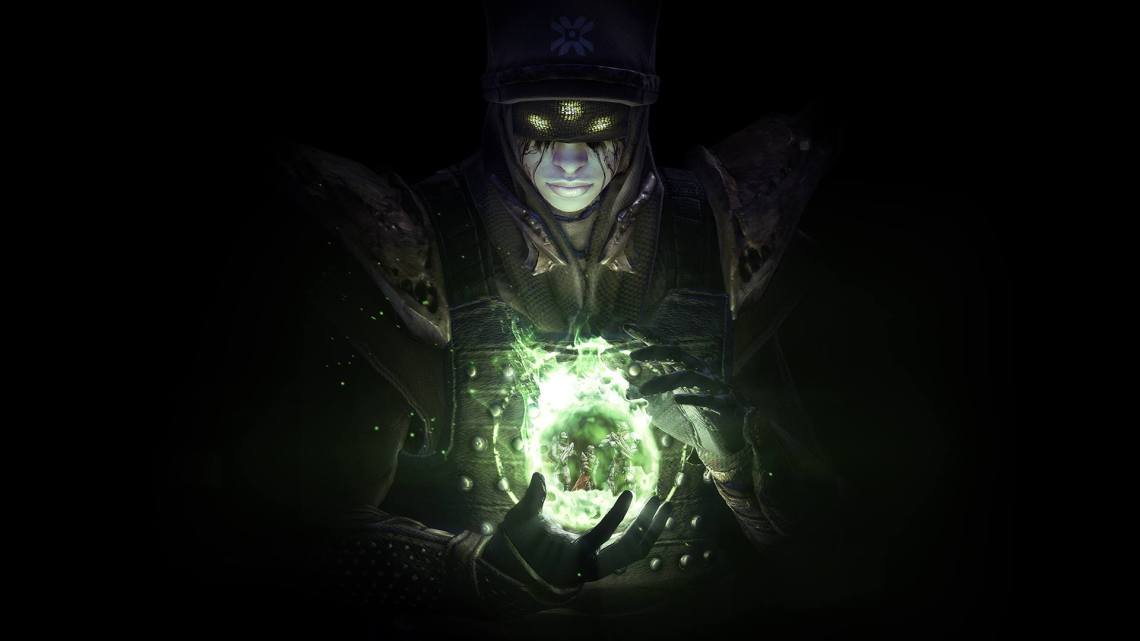
A lot has been criticized about Destiny’s on-disc disc dlc and first “expansion” The Dark Below (TDB). Those who have played it can agree that TDB was short and yes, it should have been part of the main game. However, I think one aspect that gets over looked is TDB’s progression from Destiny’s original story telling. While most of the narrative choices remain the same, the one aspect of TDB that stands out from the original is in its character development.
The first thing that TDB does to set itself apart from the motions of the original storyline is develop its characters. For example, our first character and main quest giver for this expansion is Eris Morn, a three eyed bundle of gloom and doom. Surprisingly, the newest addition to our beige colored cast of characters is actually, interesting. This is directly because her backstory is communicated over the course of the narrative. She is the first character that receives any real development over the course of a primary storyline. We learn that Eris is the lone survivor of a mission gone horribly wrong, and that she is driven by a need to avenge her fallen comrades. She lived hidden among the very enemy that destroyed her team, even altering her physiology to gain the upper hand on the Hive, becoming them in likeness. This is more backstory than any of the other primary characters received, outside of the grimoire. It is incredibly refreshing to have a character that has some substance, regardless of how criminally short our time with her is.
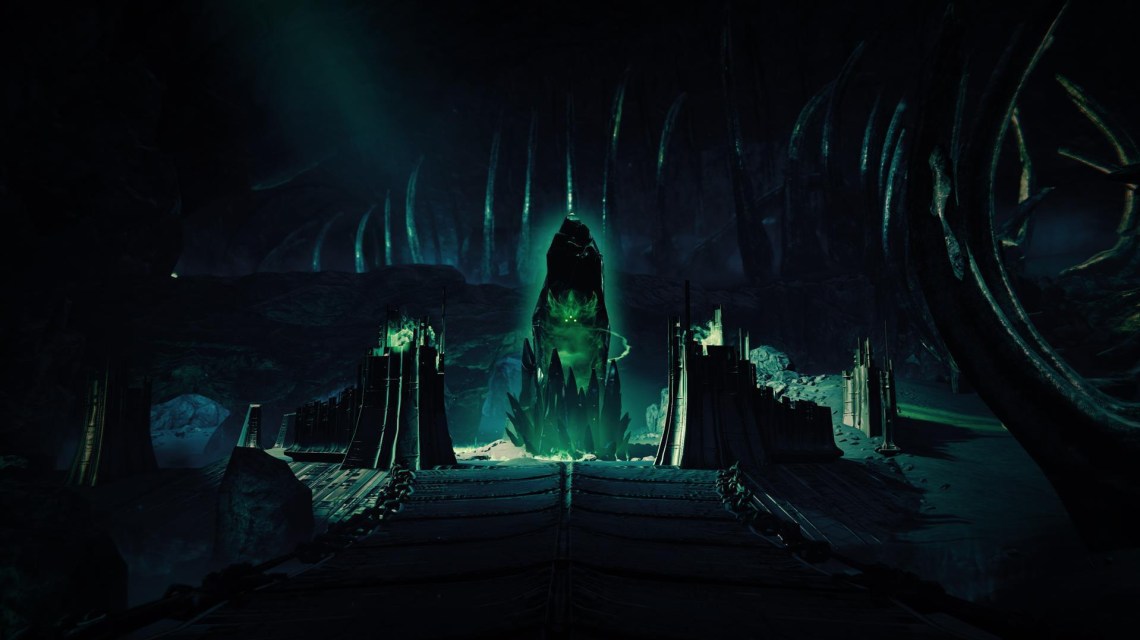
The best story mission in the entirety of TDB is built on Eris’ backstory and development. The mission, “The Wakening” is where we venture into the moon to stop the Hive from the literal wakening of their prince Crota, our verbatim big boss for the expansion. The playthrough consists of our character taking an identical path to that of Eris and her fireteam. This decent is made all the more intimidating by Eris’ retelling of the tragedies that took place around us. Retellings such as, “Few of us made it beyond the canyon. The rocks cracked apart, Hive waiting in ambush. It was worse for the ones who made it inside.” made me question why I was doing this alone if a team of 6 had failed, costing them their lives. This communicated a sense of danger that existed beyond, “there sure are quiet a lot of aliens shooting at me.” Eris’ recounting of her experience is what made this activity suspenseful, and its culmination in a gunfight with an angry healing crystal is what makes this activity stand out.
The other character that sees development is the Hive wizard Omnigul, our main antagonist for the campaign. Crota might be the final boss but we learn next to nothing about him beyond “he needs to be put down” and standing too close to him results in his sword brand chastising. While all of the exposition is given through Eris, because Omnigul’s shrieks don’t translate well, we learn her motivations are in direct contrast to our own. Omnigul’s sole purpose in existence is to wake Crota so that he may lead a siege on the Earth, and we do battle with her multiple times in obstruction of that goal. Through these altercations we witness her intelligence. Omnigul’s battle strategies include summoning her allies to fight for her and bating her enemies into fighting each other. Even after Crota’s soul is destroyed, and her plans are dashed, Omnigul is still a threat beyond a high-pitched annoyance. Since the rules of life and death are more “guidelines, for the Hive, she may still find a way to usher in Crota’s return after all. This is a noticeable improvement from, “eliminate enemy because they are a threat and are in our general vicinity.” While it isn’t much compared to the original release, we finally have characters in Destiny with… character. Up until this point our previous character development consists of “Welcome back” and other scraps of non-descriptive dialogue. It is unfortunate that we don’t get more time with the characters that do have something to say, even if it is just shrieking.
While there are things that TDB did well, there are still narrative criticisms that should not be ignored. For starters, our player character is suddenly a mute. This is presumably because our guardian was left speechless after witnessing the shape destiny released in and took up a vow of silence as penance. Additionally, the ghost’s dialogue lines are also uncomfortably absent. While it was nice to hear from another character in depth, having the ghost to create a dialogue with Eris would have helped reveal subtleties in her character. TDB also suffers from a lack of narrative weight and this is due in large part to its length. While a short intense story is far more enjoyable than a purposely prolonged narrative, the overwhelming feeling of “Side Quest” that permeates through the experience is the result of how short the main storyline is. Perhaps if some time had been given to establishing Crota’s character and the weight of the threat he represents, we would have had a lengthier campaign with a more focused narrative.
Hindsight is 20/20, and it’s been four years since the release of TDB. Knowing what we know now, and since opinions are free, what could have been done to improve the narrative? Personally, I think this would have been an excellent chance to develop the dynamic between Eris and the hunter Cayde-6. These two are the main characters in the Taken King Expansion of 2015, so it is possible to tell an interesting story with Cayde and Eris as the leads. For example, Cayde has an emotional encounter with a Fallen vandal, that takes place on the Moon. Given the setting of TDB, weaving this event into conversation instead of hiding it in the grimoire would have furthered the development of Cayde’s character, giving us the substance that Destiny’s cast so greatly needs.
Furthermore, the new Forsaken expansion dropping this September is focused on telling a “darker” narrative. TDB would have been a great opportunity to explore subjects such as survival, loss, trauma, and overcoming these obstacles. While Eris is focused on preventing Crota’s return, her encounters with enemies important to her past are not emotional. An angry yet traumatic Eris would be far more interesting than the cold emotionless character we currently have; yet maybe her withdrawn demeanor is the result of her experience. For example, the “Sunless Sell” strike involves the elimination of a character that Eris states was present during her raid on the Moon, and how this character’s demise allows her fallen fireteam to rest easy. Imagine, a TDB mission where Eris locates an enemy that was directly responsible for the death of one or more of her friends. Self-absorbed in her loss, she orders the player to go behind the Vanguard’s back and eliminate this target. As we progress through the activity, in cohesion with “The Wakening” Eris recounts events that happened to her while she was hiding amongst the Hive, communicating her pain and need for vengeance. After the target’s death Eris realizes just how much stress she was in and that, while her desire for vengeance is understandable, it is physically harming her. Eris’ entire arc could follow her battle with trauma, overcoming it to save the city and honor her friend’s sacrifice
In conclusion, while most of the content in The Dark Below failed to meet player’s expectations, there are signs of improvement. Destiny’s growth in storytelling, however slight, was made evident through improved character development. While many opportunities for development that Destiny would have greatly benefited from were not capitalized on, the progression that is present furthered the narrative evolution exists in further installments of the Destiny franchise. After falling to the dark below, Destiny showed signs of crawling its way out.
 Channel Cousin