

The storytelling of Spec Ops the line is incredible. I realize I’m a bit late to the party, people have been saying it for almost a decade now, can you really blame them?
The game’s full of smart dialogue, subtle symbolism, and compelling characters, and uses them to tell one of the most gripping stories of the shooter genre. Sure, people have been celebrating this for years, but that doesn’t mean I don’t get a turn on the Spec Ops soapbox. So, while I’m up here, I want to talk about the narrative design of Spec Ops the Line.
Want to watch the video version of this post? Click the like to watch, Welcome to Dubai: The Narrative Design of Spec Ops the Line, on YouTube.
The Narrative Structure of Spec Ops The Line
From what I can tell, the core Spec Ops’ narrative design follows a three-part structure. Conflict creates choices, and those choices have consequences.
It’s simple in theory, (of course narrative choices have consequences) but executing this structure is the difference between stories driven by characters and players, and events that just… happen to them.

This narrative structure focuses all of Spec Ops storytelling techniques, ensuring that they’re working together towards the same beats.
The Premise of Spec Ops The Line

If you aren’t familiar with Spec Ops, the premise is this: The city of Dubai has been plagued by unnatural sandstorms. The USA 33rd battalion stepped in to help but quickly lost all outside communication. Months later, the US military picks up this distress call.
“This is Colonel John Konrad, United States Army. Attempted evacuation of Dubai ended in complete failure. Death toll: too many.”
Playing as Captain Martin Walker of Delta Squad, it’s now your mission to confirm the status of the missing soldiers and report back.
Monster sandstorms aside, the premise of Spec Ops isn’t unusual for the shooter genre. I’d argue a team of American soldiers at odds with a foreign power is routine at this point, if not cliche.
However, it’s been used so often because the “Us vs Them” mentality is easy to understand, great at getting players invested in the action, and can quickly transition into gameplay.
Which brings us to the first section of Spec Ops’ narrative design, the conflict.
Crafting the Conflict – The Narrative Design of Spec Ops the Line

The conflict of Spec Ops the line subverts what most players have come to expect of military shooters.
First, you aren’t acting in defense against a foreign enemy. While their intentions are noble, Delta Squad and the 33rd are the invading forces here.
Second, foreign troops aren’t who you play against. While your first few fights are against Dubai’s insurgents, Spec Ops quickly swaps them for your fellow Americans as the primary enemy force.
Third, the conflict isn’t black and white. While it’s hard to tell what’s been tougher on Dubai, sandstorms, or the 33rd, you aren’t gunning them down because they’ve suddenly turned evil.
They’ve got families, dreams of going home, and are trying their best to serve their country, just like you.
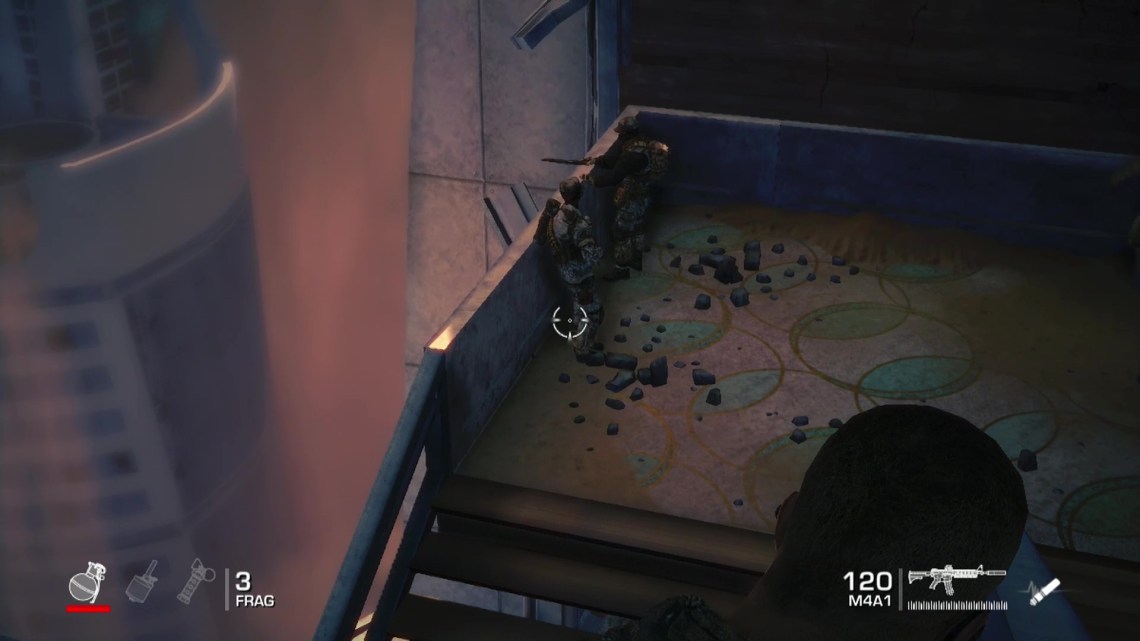
Soldier 1 -“Hard to believe there’s any peace in a place like this, huh?”
Soldier 2 – “You got to look for peace no matter where you are man. Helps remind you what you’re fighting for.
As if this isn’t conflicting enough, it turns out the insurgents you fought earlier are actually being led by the CIA, with their own valid motivations for doing so.
This conflict is grey, unfamiliar, and confusing for both players and Delta Squad. I didn’t truly make sense of it until I finished the game took time to work it out.
It’s hard to make sense of what’s really going on, rushing from gunfight to gunfight. Just when you think you’ve found clarity, spec ops makes you question yourself by thrusting you into difficult choices.
Using Gameplay to Make Narrative Choices.

For the most part, choices in military shooters don’t alter the story beyond what weapon you use in a fight. This makes perfect sense for a high-intensity action game, where distractions can kill the tension and destroy momentum.
Spec Ops the line is just as linear as any other shooter, and while its choices don’t change the plot, they do impact the story.
For example, around the midpoint of the game, you’re forced to choose between two captured men, and which one you’ll spare.
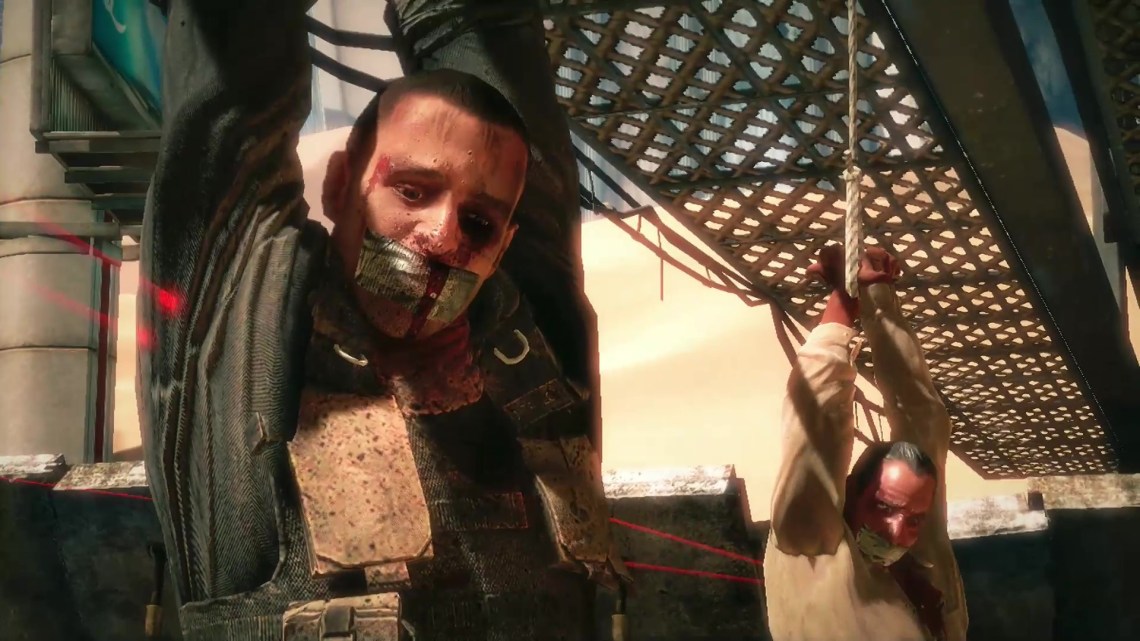
One man is a refugee that was caught stealing water. An invaluable resource when you’re trapped in the desert.
The second man is a soldier from the 33rd. He caught the thief but killed the man’s family in the process.
It’s up to you to decide who lives, and who dies.
This isn’t an easy choice. There are different implications for either case and you can learn a lot about yourself based on what decision you make, but it’s made even more impactful through the use of gameplay.
In Spec Ops, you explore the game world through combat, and you make decisions using those same mechanics. Unlike many roleplaying games, there’s no dialogue wheel, button prompts. Just moving the reticle and pulling the trigger.
By exploring these choices through gameplay, Spec Ops lets players find creative solutions to its moral dilemmas.
In this example, you can shoot one of the captives…
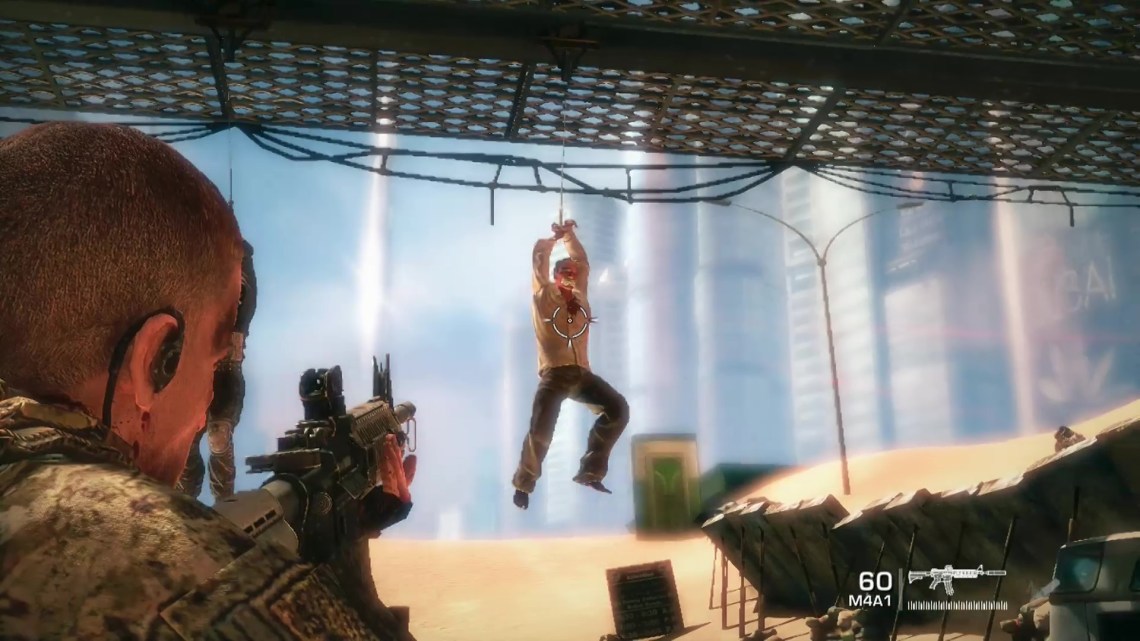
Fire at the ropes to try and free them.
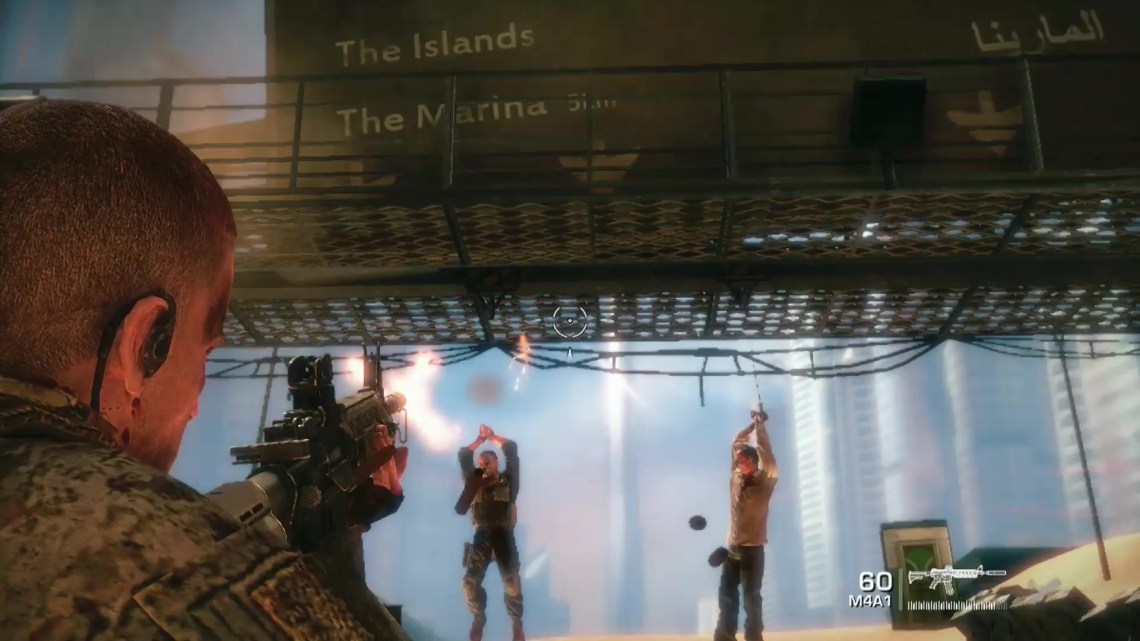
Or, take on the surrounding snipers.
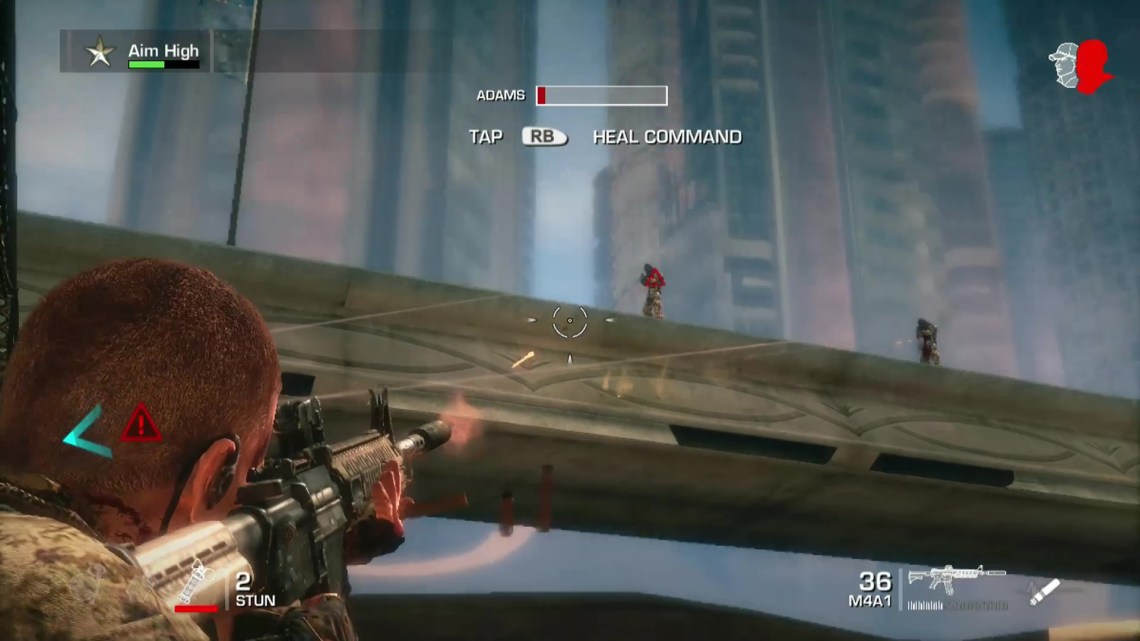
The use of gameplay gives you the means to create a third option and feel like you outsmarted the encounter. You found an option that wasn’t explicitly stated and discovered a way to avoid choosing either man. Unfortunately, the thrill of outmaneuvering these puzzles makes their consequences all the more devastating.
Communicating the Consequences of Player & Character Choices

Despite the difficult choices Spec Ops forces you to make, you have very little agency over its story. But, that doesn’t mean your choices don’t have consequences. As we saw in the last example, they definitely do, they’re just shown through changes in characters, and gameplay, instead of plot.
For example, when they entered Dubai, Delta Squad was witty and sarcastic, but respectful of each other, and instantly likable. On the battlefield, they have the lethality and call outs of professional soldiers.
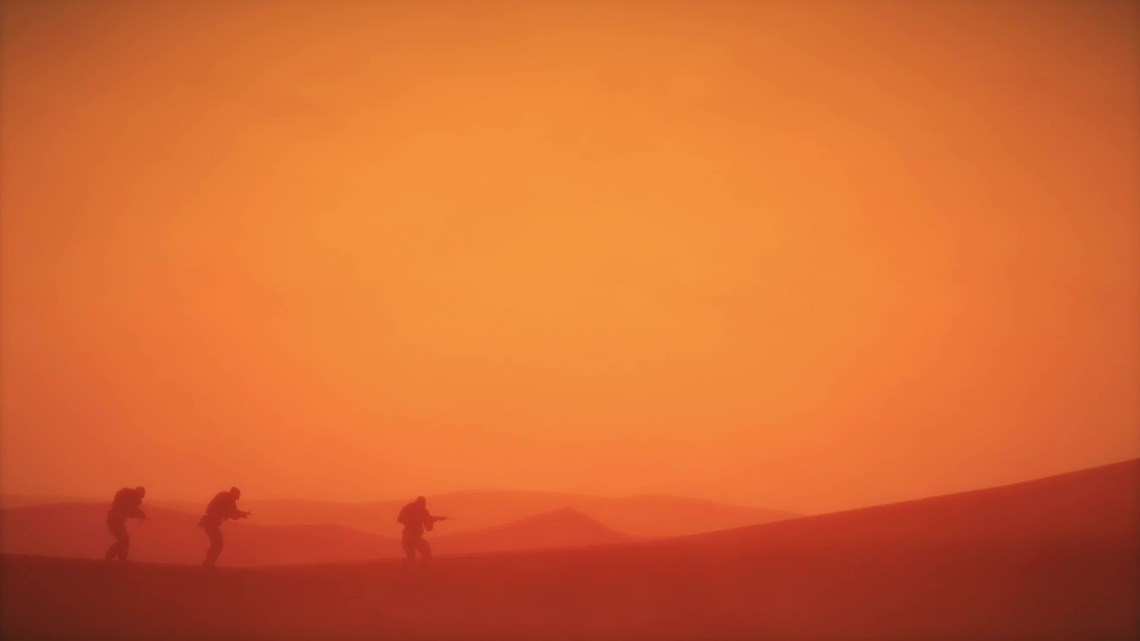
Adams: “I hear you Seargant. What’s your status?”
Lugo: “Status is chafed, Sir.”
Adams: “You say chafed Seargant?”
Lugo: “Yes, Sir. A local airborne insurgency has infiltrated the U.S. zone designated as my pants, Sir.”
But, as the bodies pile up and things continue to go wrong, Delta Squad starts to break down. They grow hostile, causing teamwork and communication to crumble both inside and outside of combat. They’re still just as deadly, if not more so, but now they’re hateful towards enemies and each other.
The fighting takes the greatest tole on Captain Walker. Not only does he become more aggressive, but his mental state rapidly declines. His mind can’t process the violence, and he starts hallucinating, making it increasingly difficult to tell if what we’re seeing is real, or all in his head.
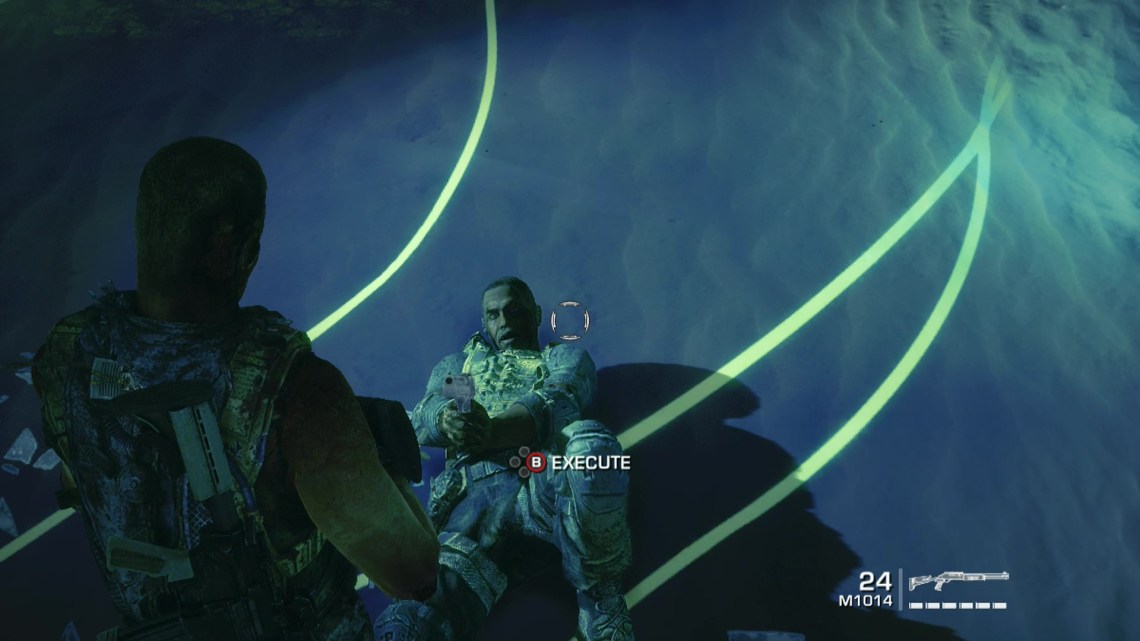
These are the consequences of your violent actions, and regardless of whether you actually had a choice or not, you feel guilty. I know I did. I came to Dubai excited to be the hero, to fight enemies, and save people. But things got out of hand, and I didn’t know when to stop. I kept trying to turn this nightmare around and ended up failing these characters I liked so much.
Narrative Design That Endures The Decade
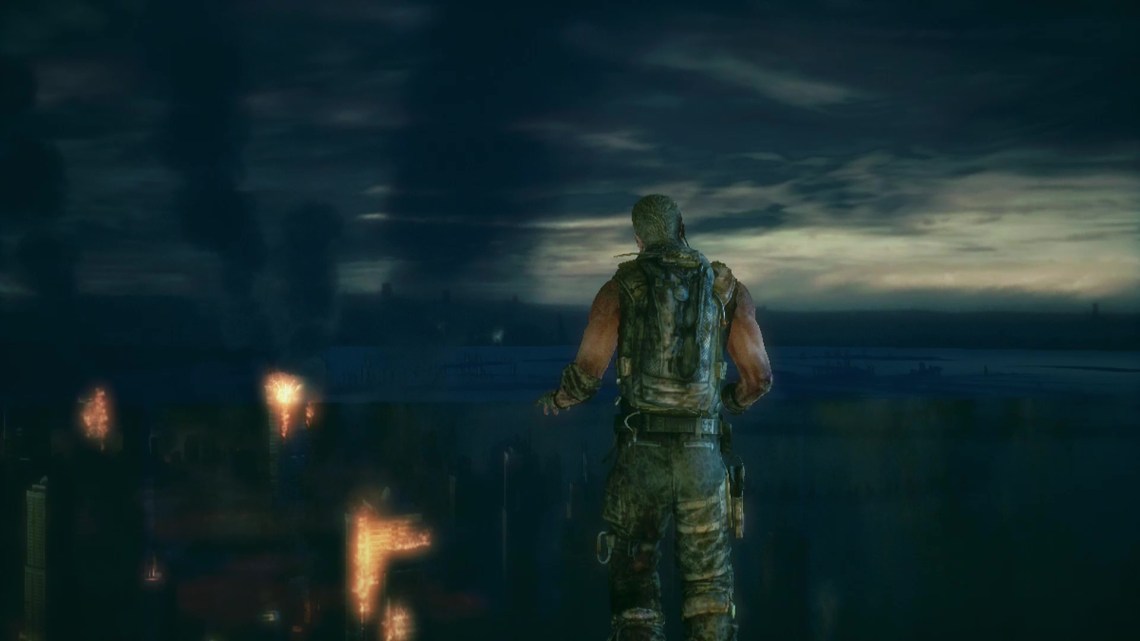
Despite how horrible it made me feel, I love that Spec Ops the Line can do that. For me, being moved emotionally is crucial to great storytelling.
There are a lot of ways Spec Ops achieves this, but they all depend on its solid narrative design. Spec Ops has a compelling conflict that drives characters, and players, to make difficult choices that have meaningful consequences.
By doing this, while subverting genre tropes, Spec Ops has created a deeply emotional experience that almost a decade later, we’re still recovering from.
Design Discussion
The narrative design of spec ops the line is only one part of this game’s incredible storytelling.
So, let me know your favorite part spec ops, narrative design or otherwise, in the comments below.
Hopefully, by appreciating them, we can continue to work through the emotional scars left by this incredible game.
All images and footage from Spec Ops the Line has been captured and edited by the author.
 Channel Cousin